Our Odyssey in the Odyssey
How a boy named Scott and a mower that never ran on Sundays taught my kids what our family is actually about.
A HOLY HOME BLOG SERIES
There was a boy down the street named Scott. He was a great kid, a good friend for Joel, and Ben tagged along the way younger brothers do, while I was home with baby Rachel. It was a great honor to be invited to Scott’s house. He had all the game systems. The PS2. The Xbox. The GameCube. Every one of them. And my boys noticed.
I heard about Scott’s house more than once. How awesome it was. And honestly? It didn’t bother me. We had our priorities and I liked them. But somewhere along the way I realized my boys didn’t actually know what our priorities were. They just knew what we didn’t have.
That’s a problem.
The conversation didn’t happen at the kitchen table — there was no sitting them down, no formal family meeting. It happened in the dark green Honda Odyssey. I can still see exactly where we were on the road. The boys were in the back, Rachel in her carseat, we were driving somewhere, and I asked it right in the middle of the recitation of the glories of Scott’s house: “Why do you think we don’t have all the game systems?”
There is something about a drive that opens ears. No one is on the spot. No one has to make eye contact. There’s nowhere to go and nothing to do but talk. Sitting kids down for a serious conversation can feel like a summons. But driving somewhere? That’s just life happening, and somehow the words come easier.
The answers I got back were what you’d expect. Something about money. Something vague. They had no idea.
So somewhere between wherever we started and wherever we were going, John and I talked to our family about what we do with what God gives us. Not as a lecture. As an invitation into the way we think.
The parable behind the conversation
Jesus once told a story about a master who left on a long journey and entrusted his servants with different amounts of money — talents, the text calls them. To one he gave five, to another two, to another one. Then he left.
“To one he gave five bags of gold, to another two bags, to another one bag, each according to his ability.” — Matthew 25:15
The ones who received more went out and put it to work. They doubled what they’d been given. But the one who received one talent buried it in the ground. Kept it safe. Did nothing with it.
When the master returned, the ones who had multiplied what they were given heard something every one of us longs to hear: Well done, good and faithful servant.
The one who buried his? The master was not pleased. Not because the talent was gone — it was right there, untouched. But because it had done nothing. It had served no one. It had changed nothing.
God doesn’t give us things so we can hold them carefully. He gives us things so we can use them well. That’s the practice of stewardship — and it starts at home.
That’s the heartbeat of this parable. And it’s the heartbeat of how John and I tried to build our home.
What we said in the Odyssey
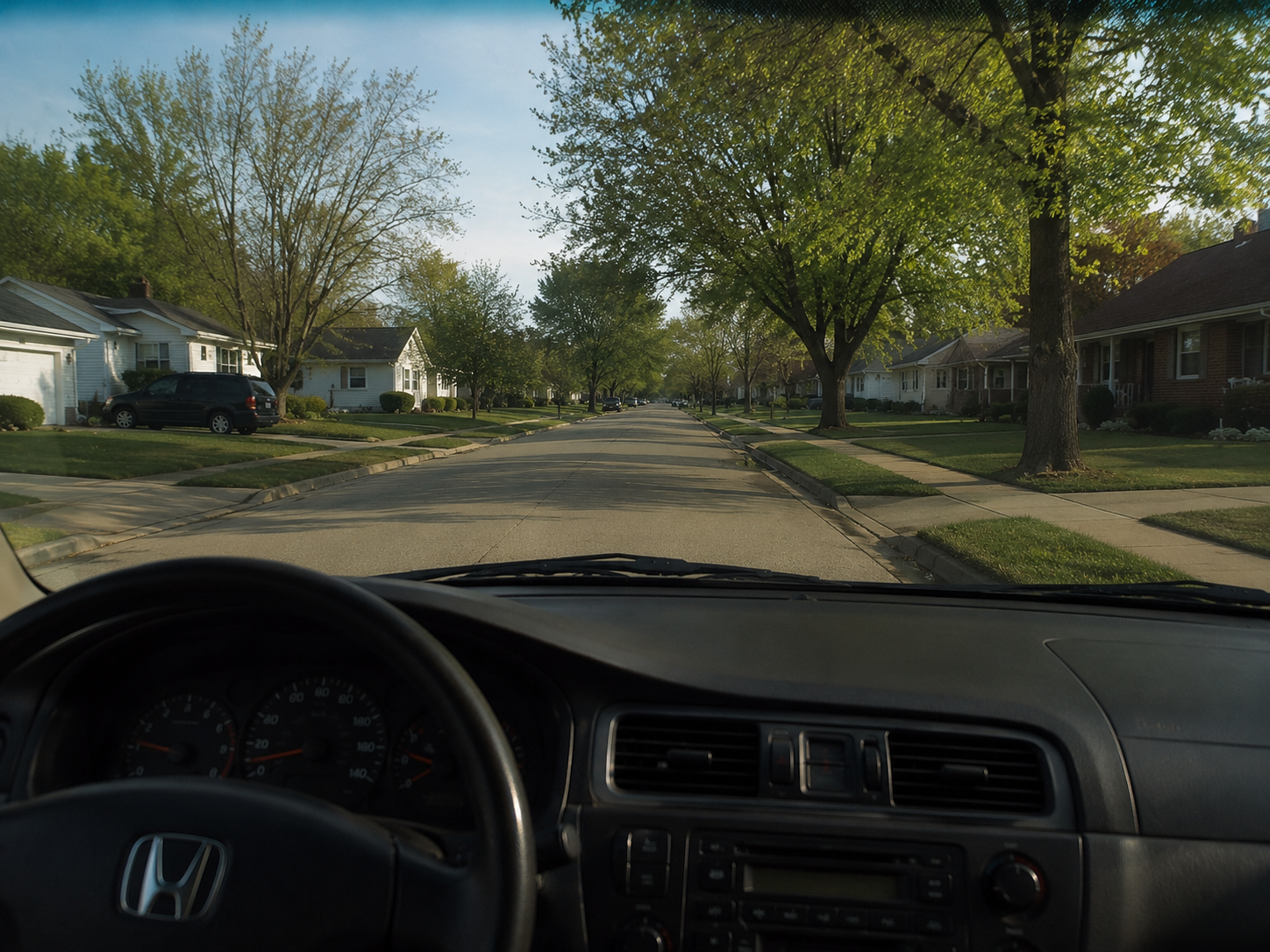
We explained that our money has an order. The first of it goes to God, not because he needs it, but because it keeps our heart and hands open. It reminds us that nothing we have is really ours to begin with. Then our needs. Then we save, for the future, for the unexpected, for the moment life surprises us. And then yes, fun things. We enjoy what God gives.
But we also save a little more. Because we want to be ready. When someone around us has a need, we want to be the family that can say yes. We want to be standing there with something in our hands.
We talked about time the same way. Your dad doesn’t mow on Sundays. Not because of a rule — because of a conviction his own parents planted in him. That day belongs to something else. Rest is not laziness; it’s faithfulness to the rhythm God built into creation. We give it back.
The boys listened. Rachel too from her carseat. I don’t know exactly what landed that day. But I know what happened in the years that followed.
While they were still small — before they could have remembered the details — we watched kids on weekends so a mom going through cancer treatment could rest. We met quiet financial needs without making a show of it. We took in a teenage boy who was in a hard season with his single mom. We didn’t announce these things. We just did them, and the three kids were there, watching.
Children absorb more than we think — not from what we tell them, but from what they see us do when we think no one is paying attention.
That is a family stewarding what it’s been given. Not hoarding it. Not burying it. Putting it to work in God’s kingdom, right here, in the neighborhood, in the ordinary.
The question underneath the question
The real issue was never the game systems. It was whether my kids knew who we were.
Scott’s family had their priorities. We had ours. Neither was bad. But I wanted my kids to be able to answer, in their minds, who we are. Not a family that can’t have everything. We are a family that is intentional with what we’ve been given.
That’s a kingdom identity. Not a perfect one. Not one without struggle or inconsistency. But a directional one. A family pointed toward something bigger than comfort, bigger than the next game system, bigger than keeping what we have safe in a hole in the ground.
God gives each of us something. Some families have more, some less. The question isn’t how much, it’s what you do with it. And more than that, it’s whether your children know the answer from your mouth or if they have to guess.
Family challenge
Easy
Have a simple stewardship conversation, in the car. Not as a lesson, as a window into how you and your kids think. Ask: “Do you know what our family does with what we earn?” You might be surprised by what they assume or astonished by their insight.
Easy if it’s a habit · Medium if you’re starting fresh
Name one small Sabbath habit in your home, something you protect, something you give back. It doesn’t have to be grand. John just didn’t mow on Sundays.
Big — try this one in the next 30–90 days
Look for one need around you, a neighbor, a friend, a family at church. As a family ask God if you’re the ones meant to meet it. Then say yes if you can. Keep it as quiet as you can.
Next in the series:
Another story, another parable - I’ll pick the one that is the most fun to me…and I hope you’ll like it and learn something to pick out of it, too.
This was originally shared on Substack, where I write weekly Holy Home Letters. You can read it here or there.
https://calltammycall.substack.com/p/our-odyssey-in-the-odyssey